
Individuals told the investigators they had not been provided a written explanation for their placement nor an expectation of when they would be released from isolation, but they said they believed they were put in the segregation unit in retaliation for requesting improved medical care and conditions. Some were undertaking a hunger strike.
Conditions at the facility “are alarming,” the report concluded. “Based on the monitoring visit and related interviews, DRC finds that conditions at California City result in the abuse and neglect of people with disabilities.”
ICE did not immediately provide a comment on the Disability Rights California report’s allegations.
Todd, the CoreCivic spokesperson, denied the claims, saying that detainees have access to a full array of health care services, from screening to treatment, and that emergency care is available 24 hours a day.
“All detainees have daily access to sign up for medical care and mental health services. For those medical needs requiring specialized care, the facility works closely with local hospitals and providers,” he added.
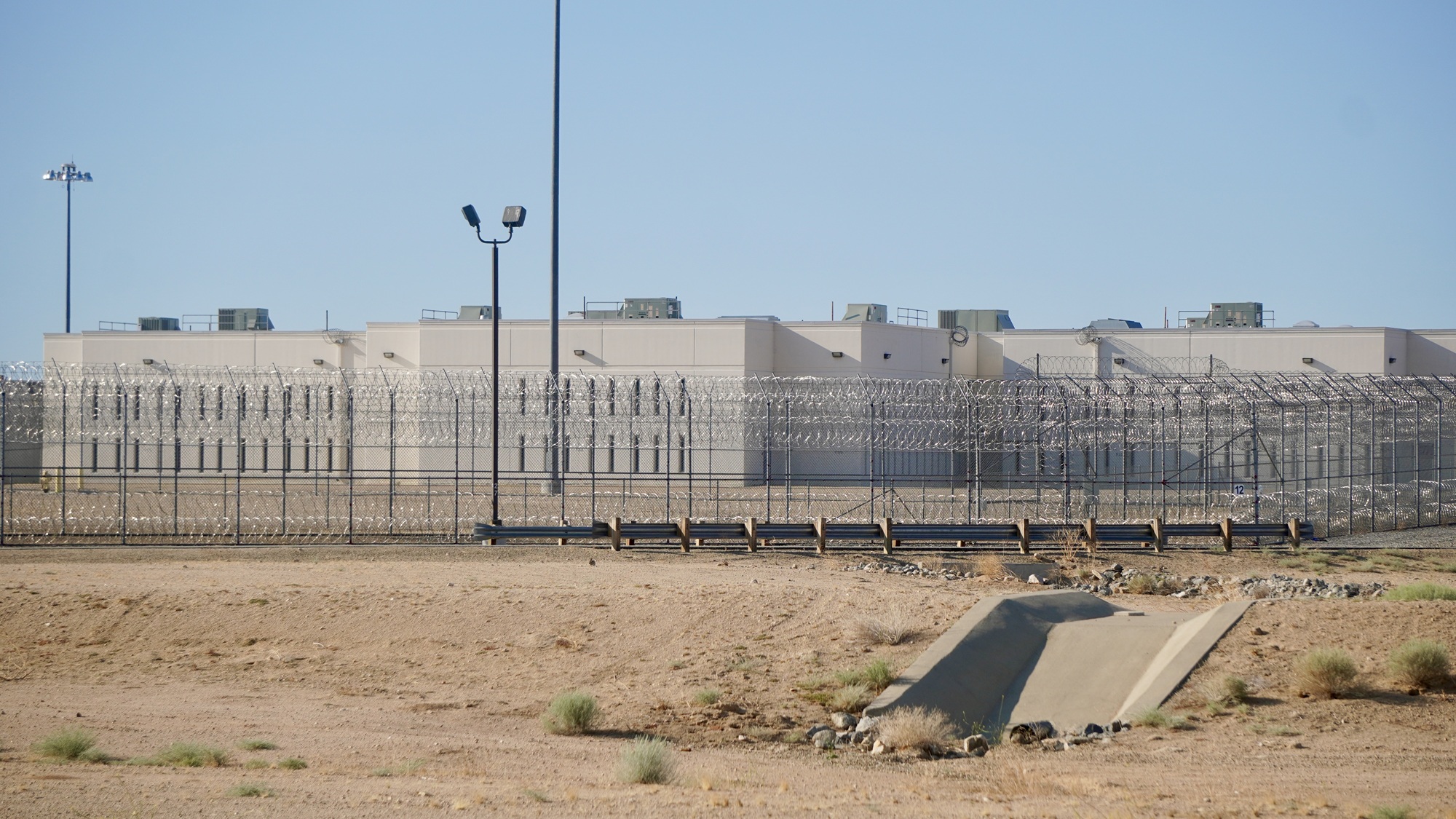 The CoreCivic Inc. California City Immigration Processing Center in California City, California, in June 2025. (Saul Gonzalez/KQED)
Todd said allegations of insufficient clothing, bedding and toiletries, and substandard food and water, were false. Many of the staff members eat the same meals as the detainees and drink the same water, he said.
He also said that “solitary confinement” does not exist at any CoreCivic facility, but he acknowledged that “restrictive housing may be used for various reasons, including medical and mental health observation and administrative/investigative purposes.” Restrictive housing and solitary confinement both refer to holding individuals in single cells apart from the general population, with little social contact. Government agencies and criminal justice experts sometimes use the terms interchangeably.
The prison was built in the 1990s with a 256-bed “segregation unit,” according to court filings in a lawsuit brought by advocates alleging that CoreCivic began operating the ICE facility in late August without first obtaining state and local permits.
ICE’s policies make clear that detention is not a form of punishment, but a means of holding people who are deemed a public safety or flight risk while their immigration case is decided.
ICE and CoreCivic signed a two-year, $130 million contract for the 2,560-bed prison, which had been sitting vacant after California stopped using it for state prisoners in 2023.
As of Oct. 25, the facility was housing roughly 746 ICE detainees, according to a court declaration by the warden. CoreCivic has said it expects the detention center will be fully occupied by early next year.